
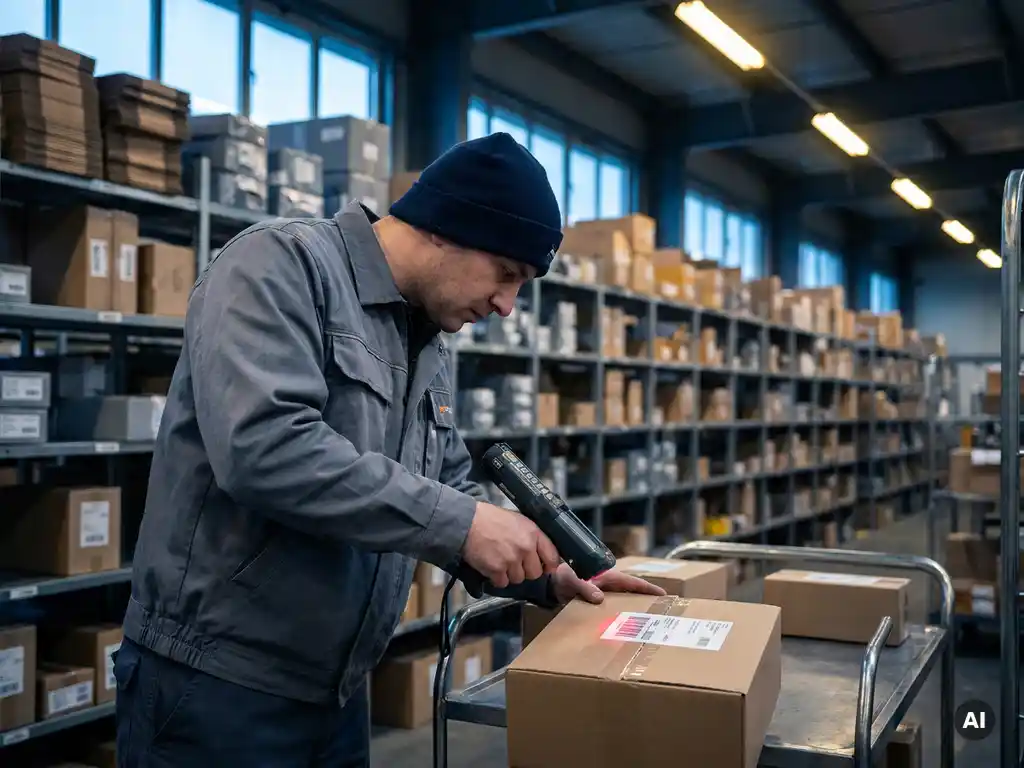
Serialised inventory management improves supply chain visibility by assigning a unique identifier, typically a serial number, to every individual unit in your stock. This allows businesses to track each item’s exact location, condition, and movement history throughout the entire supply chain, from inbound receipt to final delivery or return. The sections below unpack how this works in practice, what problems it solves, and which operations benefit most.
What data does serialised inventory tracking actually capture?
Serialised inventory tracking captures a unique record for each individual product unit, linking it to data points such as its serial number, current location, movement history, condition status, configuration details, and ownership chain. Unlike batch or SKU-level tracking, which groups identical products together, serialisation treats every single unit as a distinct, traceable entity.
In practical terms, this means a warehouse management system can tell you not just that you have 200 routers in stock, but precisely which serial numbers are on which shelf, when each arrived, whether it has been configured, and where it was shipped. For technology products such as modems, IP telephones, or networking switches, this level of granularity matters enormously because individual devices often carry unique firmware versions, configuration files, or warranty statuses.
The data captured through serial number tracking typically includes:
- Unique serial number or IMEI registered at goods receipt
- Inbound condition and quantity verification records
- Storage location within the warehouse, updated in real time
- Technical processing history, such as firmware updates or configuration-file installation
- Order fulfilment records showing which unit was shipped to which customer
- Return and inspection history for units that re-enter the supply chain
This granular dataset is what makes serialised tracking the foundation of accurate, product-level supply chain visibility rather than an approximate picture of stock levels.
How does serialised inventory management improve supply chain visibility?
Serialised inventory management improves supply chain visibility by creating a continuous, product-level audit trail that follows each unit from the moment it enters a warehouse to the moment it reaches its destination or is returned. This eliminates the information gaps that exist in batch-level systems, where you know how many units you have but not the status of any specific one.
When every item carries a unique identifier that is scanned and recorded at each stage, operations teams gain a real-time view of where individual products are, what has been done to them, and what still needs to happen before they are ready to ship. This is particularly valuable in IT equipment fulfilment, where a single order might involve devices that require configuration before despatch.
The visibility improvements operate at several levels simultaneously. At the operational level, warehouse teams can locate specific units instantly, reducing picking errors and the time spent searching for misplaced stock. At the management level, supply chain directors gain accurate reporting on inventory positions and throughput. At the customer level, businesses can answer precise questions about which device was sent, when, and in what condition, which is essential for warranty management and after-sales support.
Serialisation also creates accountability at handover points. When a unit is scanned at each transition, whether that is from inbound to storage, storage to technical processing, or processing to despatch, the system records who handled it and when. This makes it straightforward to identify where a problem occurred if something goes wrong.
What are the biggest supply chain problems serialisation solves?
The biggest supply chain problems that serialisation solves are inventory inaccuracy, limited traceability, and the inability to identify individual units when something goes wrong. These are recurring pain points for businesses handling technology products, telecommunications hardware, and electronic equipment, where interchangeable-looking devices can have very different configurations or histories.
Inventory inaccuracy and phantom stock
Without serialisation, stock counts reflect quantities rather than individual units. Discrepancies accumulate over time through picking errors, misplacements, or unrecorded movements, resulting in phantom stock, where the system shows inventory that cannot actually be located. Serialised tracking anchors every unit to a specific location and status, making discrepancies visible immediately and easier to resolve.
Lack of product-level traceability
When a customer reports a faulty device or a business needs to identify which units were affected by a firmware issue, batch-level records offer limited help. Serialisation provides a complete history for every unit, so businesses can trace exactly where a specific device has been and what was done to it. This is critical for quality management, recall handling, and warranty administration across technology and value-added logistics services.
Fulfilment errors and mis-shipments
In B2B fulfilment environments where customers may require specific device configurations or pre-loaded software, shipping the wrong unit is a costly mistake. Serialised scanning at the point of picking and packing ensures that the correct unit, verified by its unique identifier, is matched to the correct order before it leaves the warehouse.
How does serialised tracking work across returns and reverse logistics?
In reverse logistics, serialised tracking works by reconnecting a returned unit to its original outbound record the moment it is scanned on arrival. This instantly surfaces the product’s full history, including what it was, where it went, what condition it was in when it left, and what has happened since. That context is what makes efficient, informed returns processing possible.
Without serialisation, a returned device is essentially anonymous. Staff must rely on customer-provided information, which may be incomplete or inaccurate, to understand what they are handling. With a serial number scan, the system retrieves the unit’s complete record automatically, allowing the returns team to assess the item against its known prior condition and processing history.
This matters significantly for reverse logistics operations handling large volumes of returned telecommunications equipment, networking hardware, or electronic devices. A serialised system can immediately flag whether a returned unit is within warranty, whether it has been previously repaired, or whether it matches the condition described in the return request. From there, the unit can be routed to the appropriate next step: refurbishment, repair, reintegration into available stock, or responsible disposal.
Serialised returns data also provides management with actionable reporting. Return rates by product model, common fault types, and the proportion of returned units successfully recovered for reuse are all insights that become accessible when every item carries its own traceable identity throughout the reverse supply chain.
Which industries benefit most from serialised inventory management?
The industries that benefit most from serialised inventory management are those handling high-value, individually distinct, or regulated products where knowing the exact status of each unit is operationally or legally significant. These include telecommunications, IT hardware distribution, healthcare technology, and e-commerce businesses selling electronic equipment.
Telecommunications operators and internet service providers manage enormous volumes of routers, modems, set-top boxes, and related customer premises equipment. Each device typically carries a unique MAC address or IMEI, and operators need to know which device is provisioned for which customer, what firmware version it is running, and where it is in the field or returns cycle. Serialised tracking makes this level of management operationally feasible.
IT hardware distributors and technology manufacturers face similar requirements. Networking switches, servers, and enterprise hardware are high-value items with individual warranty entitlements, configuration histories, and resale considerations. Serialisation supports accurate inventory administration and enables efficient technical services such as device configuration and firmware management before products reach the end customer.
Healthcare technology suppliers managing medical devices such as AED units or diagnostic equipment operate under strict requirements for product identification and traceability. Serialised inventory management supports the careful handling and accurate record-keeping these products demand throughout storage and distribution.
E-commerce businesses and B2B fulfilment operations handling electronics also benefit considerably. As order volumes grow, the risk of fulfilment errors increases without product-level tracking. Serialisation provides the accuracy and accountability needed to scale without proportionally increasing error rates or returns.
How BNS Data Logistics supports serialised inventory management
BNS Data Logistics provides serialised inventory management as a core part of its logistics and fulfilment services for businesses handling technology products, telecommunications hardware, and electronic equipment. Using the proprietary Cosmos warehouse management system, BNS registers, tracks, and manages individual product units by serial number throughout every stage of the supply chain.
- Serial number registration at goods receipt: Every inbound unit is scanned and recorded individually, creating an accurate product-level inventory from the moment stock arrives.
- Real-time inventory visibility: Cosmos provides up-to-date information on the location, status, and movement history of each serialised unit, giving operations teams and supply chain managers accurate data at all times.
- Technical processing integration: BNS integrates device configuration, firmware updates, and technical preparation directly into the logistics workflow, with each step recorded against the unit’s serial number.
- Serialised returns processing: Returned units are scanned and matched to their outbound records on arrival, enabling informed condition assessment, repair routing, and inventory reintegration where appropriate.
- Reporting and operational data: BNS provides clients with visibility into inventory movements, return rates, and product lifecycle data, supporting better decision-making across the supply chain.
These capabilities are relevant whether you are managing telecom equipment fulfilment, IT hardware distribution, healthcare technology logistics, or e-commerce fulfilment for electronic products. If your business requires precise, product-level supply chain visibility, contact BNS Data Logistics to discuss how serialised inventory management can be integrated into your operations.
Gerelateerde artikelen
- How can serialized fulfilment support product recalls and warranty management?
- How can businesses track which electronic devices were delivered to each customer?
- How can technology companies maintain real-time visibility of outsourced inventory?
- How can internet service providers manage thousands of customer-owned devices?
- How can technology companies improve the fulfilment of serialized products?