
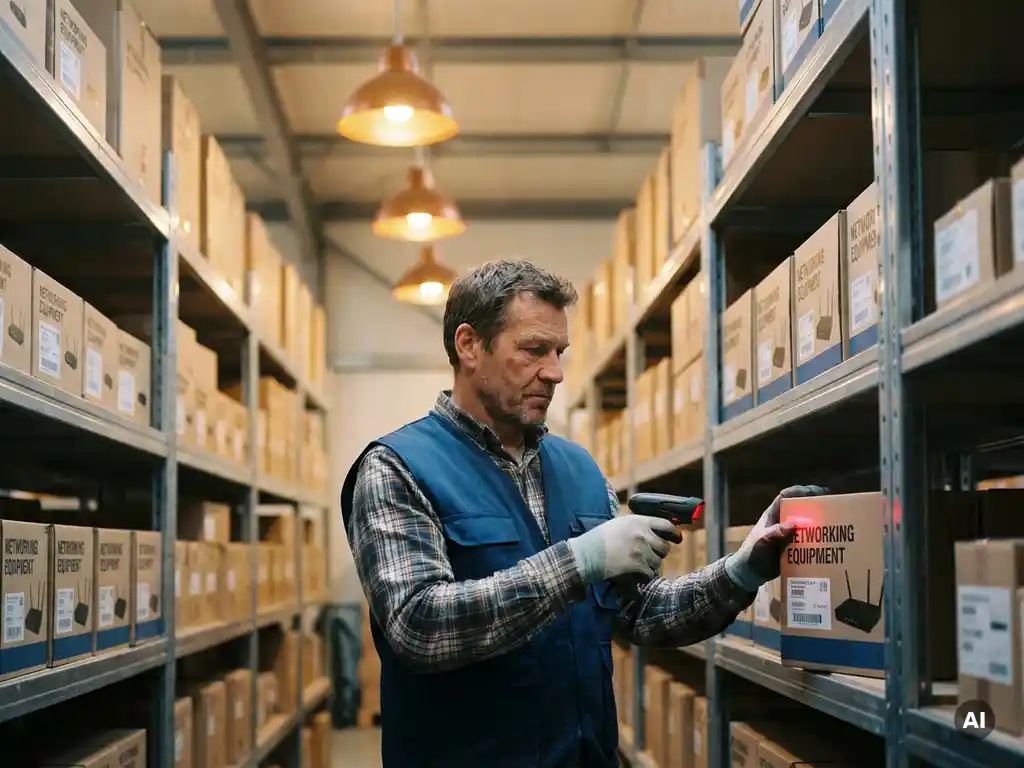
Serial number tracking significantly improves telecom equipment distribution by giving every device a unique, scannable identity that can be monitored at every stage of the supply chain. This means operators, distributors, and logistics teams can locate any individual unit, verify its configuration status, and confirm its delivery history without relying on batch-level estimates. The sections below explore the specific problems serialised tracking solves and how it works in practice across the full equipment lifecycle.
What problems does poor equipment visibility cause in telecom distribution?
Poor equipment visibility in telecom distribution leads to misrouted shipments, configuration errors, inaccurate stock counts, and delayed deployments. When logistics teams cannot identify individual devices within a batch, they lose the ability to confirm which units have been provisioned, which are awaiting configuration, and which have already been dispatched to customers or field engineers.
In practice, this creates a cascade of operational problems. A router shipped to the wrong customer may carry the wrong firmware or configuration file, requiring a costly retrieval and reconfiguration. Without device-level traceability, it becomes difficult to isolate a faulty batch from functioning stock, which can mean entire shipments are quarantined unnecessarily. Inventory counts based on bulk quantities rather than individual units frequently result in discrepancies between what the warehouse management system reports and what is physically on the shelf.
For telecom operators managing thousands of customer premises equipment units such as modems, set-top boxes, and IP telephones, these gaps in visibility translate directly into failed installations, repeat technician visits, and customer complaints. The financial and reputational consequences of poor equipment visibility are significant, particularly when deployment timelines are tight and hardware availability is critical to service activation.
How does serial number tracking work in a telecom logistics operation?
Serial number tracking in telecom logistics works by registering each device’s unique identifier at the point of inbound receipt and linking that identifier to all subsequent handling events, from storage and configuration through to outbound shipping and returns. Every scan creates a timestamped record that builds a complete, auditable history for each individual unit.
When a shipment of routers or modems arrives at a warehouse, each device is scanned and its serial number is recorded within the warehouse management system. From that point forward, every movement generates a new data entry: when the device moves to a staging area for configuration, when firmware is applied, when it is picked for a specific order, and when it leaves the facility. This chain of events means the current location and status of any unit can be retrieved instantly.
In a well-structured technology fulfilment operation, serialised inventory management integrates directly with order processing. When a customer order is fulfilled, the system confirms which specific serial numbers were shipped, eliminating ambiguity and enabling precise post-delivery support. If a customer reports a fault, the support team can immediately access the device’s full history, including its configuration details and shipping route, without manual investigation.
What types of telecom equipment benefit most from serialised tracking?
The types of telecom equipment that benefit most from serialised tracking are devices that are individually provisioned, firmware-dependent, or high in unit value. This includes routers, modems, set-top boxes, IP telephones, DECT systems, and network switches, where each unit requires specific configuration before deployment and must be traceable throughout its operational life.
Routers and modems are particularly well suited to serial number tracking because each device is typically assigned to a specific end-user account and must carry a configuration file tailored to that customer’s service. Without serialised tracking, there is no reliable way to confirm that the correct configuration has been applied to the correct unit before it is dispatched.
Set-top boxes and IPTV equipment present similar requirements. These devices are often registered to individual subscriber accounts and must be matched accurately during fulfilment. High-value networking hardware such as managed switches and enterprise access points also benefits from serialised inventory management, both to protect against loss and to support warranty administration. Even accessories such as power adapters and cables can carry serial or batch identifiers when regulatory compliance or safety traceability is required.
How does serial number tracking reduce errors during hardware provisioning and configuration?
Serial number tracking reduces provisioning and configuration errors by creating a direct, verifiable link between a specific device and the configuration instructions assigned to it. Before a unit is packed for shipment, the system confirms that the correct firmware version and configuration file have been applied to that exact serial number, preventing mismatches that would otherwise only be discovered after delivery.
Without this link, configuration workflows depend on batch assumptions: an operator assumes that all units in a particular box have received the same treatment. In reality, processing errors, interrupted workflows, or mixed stock can mean individual devices are shipped with outdated firmware or no configuration at all. Serialised tracking eliminates this uncertainty by requiring a confirmed scan at each processing stage before a device can progress to the next step.
This approach is particularly valuable when telecom operators deploy equipment across multiple customer segments with different service profiles. A single warehouse may be processing devices destined for residential broadband customers, business fibre connections, and wholesale partners, each requiring a different configuration. Technical services integrated with serialised logistics ensure that each unit is matched to the correct profile and verified before it leaves the facility, reducing the volume of failed activations and return shipments caused by configuration errors.
How does serialised tracking support reverse logistics and equipment refurbishment?
Serialised tracking supports reverse logistics and refurbishment by preserving a device’s complete history when it re-enters the supply chain. When a returned modem or router arrives at the warehouse, its serial number immediately reveals its original configuration, previous deployment location, and any recorded fault history, allowing processing teams to make faster, more informed decisions about repair, refurbishment, or disposal.
Without serialised data, returned equipment must be assessed from scratch. Technicians cannot distinguish a lightly used device from one that has been in service for several years, and they have no way to confirm whether reported faults have been seen before. This slows down the assessment process and increases the risk of refurbished stock being returned to inventory in a condition that does not meet quality standards.
With serialised reverse logistics, each returned unit can be routed directly to the appropriate processing stream. A device with a clean history and minimal use may require only cosmetic inspection before being reintegrated into available stock. One with a documented fault history may be directed to diagnostics and repair. This structured approach supports the practical goals of reverse logistics management: recovering product value, reducing unnecessary disposal, and maintaining accurate inventory records for reusable equipment. It also strengthens the business case for refurbishment programmes, since the condition and history of each unit are already documented before processing begins.
How BNS Data Logistics supports serialised telecom equipment fulfilment
BNS Data Logistics provides end-to-end logistics and technical services for telecom operators, hardware distributors, and technology companies that need reliable, traceable management of their equipment throughout the full product lifecycle. For organisations dealing with the challenges described in this article, BNS offers the following directly relevant capabilities:
- Serialised inventory registration: Every device is scanned and registered by serial number at inbound receipt using the Cosmos warehouse management system, providing immediate and ongoing visibility into individual unit locations and statuses.
- Device configuration and firmware management: BNS technicians apply configuration files and firmware updates to individual units according to customer specifications, with each step verified against the device’s serial number before it progresses through the workflow.
- Accurate order fulfilment: Outbound shipments are confirmed at unit level, ensuring that the correct serialised devices are matched to the correct orders, reducing provisioning errors and failed activations.
- Structured returns processing: Returned equipment is received, scanned, and assessed using its full serialised history, enabling faster condition grading and more efficient routing to refurbishment, repair, or responsible disposal.
- Value-added logistics: BNS provides value-added services such as repackaging, labelling, and co-packing that complement serialised tracking and prepare equipment for deployment or resale.
The specific benefits for each organisation depend on their product mix, volumes, and operational requirements. If you are managing telecom equipment distribution and want to discuss how serialised logistics can reduce errors and improve visibility across your supply chain, contact BNS Data Logistics to explore what a practical solution might look like for your operation. Visit bnsdl.com/contact to get in touch.
Gerelateerde artikelen
- How can internet service providers manage thousands of customer-owned devices?
- How do fulfilment providers track individual devices from warehouse to customer?
- What are the benefits of outsourcing IT equipment fulfilment?
- How can technology companies improve the fulfilment of serialized products?
- What should internet service providers look for in a fulfilment partner?