
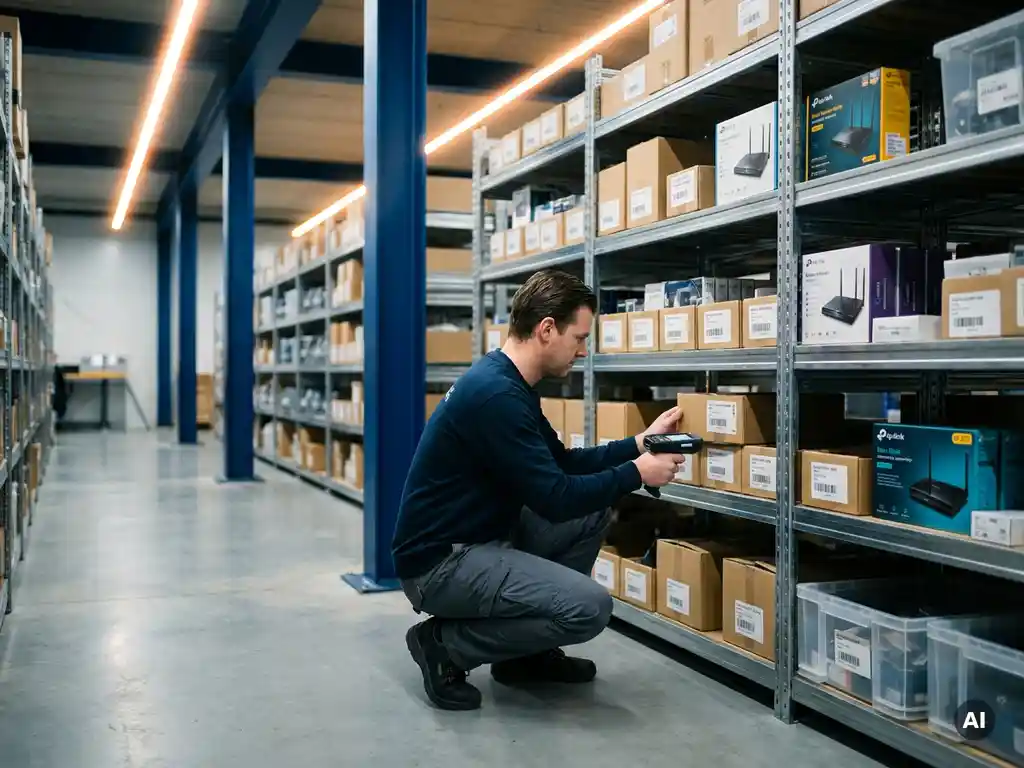
Outsourced inventory management reduces operational costs for technology companies by eliminating the fixed expenses tied to warehouse space, staff, and infrastructure, while replacing them with variable costs that scale with actual business activity. Rather than maintaining large internal logistics teams and physical storage capacity that may sit underutilised, companies pay for the capacity and services they genuinely use. The sections below unpack the specific cost drivers, the tasks that can be outsourced, and how to decide whether the time is right to make the switch.
What hidden costs drive up inventory management expenses for technology companies?
The true cost of managing inventory in-house extends well beyond rent and staff salaries. Technology companies frequently underestimate expenses related to stock inaccuracies, system maintenance, compliance requirements, and the administrative burden of tracking individual devices at the serial number level. When these costs are not measured directly, they remain invisible until they start causing operational problems.
Some of the most significant hidden costs include:
- Warehouse space and overhead: Dedicated storage for IT hardware, networking equipment, and telecommunications devices requires climate-appropriate space, racking, and security. These costs are largely fixed, meaning they do not reduce when stock volumes drop.
- Staff and training: Warehouse operatives need to understand the specific handling requirements for electronic equipment, including electrostatic discharge (ESD) precautions, serial number registration, and condition grading. Recruiting and retaining skilled staff adds ongoing cost and management effort.
- Inventory inaccuracies: When stock records do not match physical reality, businesses face delayed shipments, incorrect orders, and wasted time in reconciliation. For technology products tracked at the device level, even small discrepancies can create significant downstream problems.
- System investment: Maintaining a reliable warehouse management system (WMS) that supports serialised inventory management, real-time tracking, and reporting requires ongoing investment in software licences, updates, and integration work.
- Returns and write-offs: Without structured returns processing, returned equipment accumulates, loses value, and eventually requires disposal, all of which carry costs without recovering value.
For companies handling telecommunications hardware, routers, modems, or medical technology, the stakes are higher still. These products often require individual device tracking, configuration records, and condition assessments, adding layers of complexity that basic inventory processes are not designed to handle.
How does outsourced inventory management reduce operational costs?
Outsourced inventory management reduces costs primarily by converting fixed overheads into variable, activity-based expenses. Instead of maintaining warehouse capacity and staff regardless of demand, a company pays for the storage space, handling, and processing it actually uses. This shift improves cost predictability and removes the financial drag of underutilised resources during quieter periods.
Beyond the structural cost shift, outsourcing delivers efficiency gains that internal operations often cannot match:
- Shared infrastructure: A specialist logistics partner operates at a scale that distributes fixed costs across multiple clients. This makes access to professional warehouse facilities, scanning equipment, and WMS technology far more cost-effective than building equivalent capability internally.
- Reduced error rates: Structured processes for inbound checking, serialised registration, and order picking reduce the frequency of fulfilment errors, which carry direct costs in re-shipping, replacements, and customer service effort.
- Faster throughput: Experienced fulfilment teams working with established workflows typically process orders more quickly than internal teams managing logistics alongside other responsibilities.
- Avoided capital expenditure: Outsourcing removes the need to invest in warehouse space, racking, scanning hardware, and WMS licences. These capital costs are absorbed by the logistics partner.
- Scalability: During peak periods, such as product launches or seasonal demand spikes, an outsourced partner can absorb volume increases without requiring the client to hire temporary staff or lease additional space.
The cost reduction potential depends on the company’s current operational setup, product volumes, and the complexity of its inventory requirements. Businesses handling high-value or individually tracked technology products tend to see the strongest impact, because the operational overhead of managing serialised inventory accurately in-house is disproportionately high.
What types of inventory management tasks can technology companies outsource?
Technology companies can outsource most stages of the inventory management process, from goods receipt through to order despatch and returns handling. The scope of what can be handed to a logistics partner is broader than many businesses initially assume, and extends well beyond basic warehousing.
Core inventory and fulfilment tasks
These include inbound shipment coordination, goods-in checks, quality and quantity verification, secure storage, stock counting, and outbound order picking and packing. For technology products, this typically involves serial number registration at goods receipt so that every individual device is traceable throughout its time in the warehouse. B2B order fulfilment at this level requires a WMS capable of managing product-level data rather than just SKU quantities.
Value-added and technical tasks
Beyond standard warehousing, technology companies can also outsource tasks such as barcode and QR-code labelling, repackaging, co-packing, palletisation, device configuration, firmware updates, and component assembly. These value-added logistics services are particularly relevant for telecom operators and IT distributors that need devices prepared to a specific standard before despatch, reducing the work required at the customer’s end.
Returns and reverse logistics tasks
Returns processing, condition assessment, diagnostic testing, refurbishment, and inventory reintegration can all be managed externally. Structured reverse logistics services allow companies to recover value from returned equipment rather than writing it off, while maintaining visibility into what has come back, its condition, and its status.
What’s the difference between outsourcing inventory management and using a 3PL?
Outsourcing inventory management and using a third-party logistics provider (3PL) are closely related concepts, but they are not identical. A 3PL is a company that provides logistics services on behalf of another business, which typically include warehousing, order fulfilment, and distribution. Outsourcing inventory management is the broader decision to hand over responsibility for stock oversight to an external party, which may or may not involve a 3PL.
In practice, most technology companies that outsource inventory management do so through a 3PL or specialist fulfilment partner. The distinction worth understanding is the depth of service involved:
- Basic 3PL: Provides warehouse space, picks and packs orders, and arranges shipping. Inventory management is often limited to SKU-level stock counts without device-level traceability.
- Specialist technology fulfilment partner: Offers serialised inventory management, serial number tracking, device configuration, returns processing, and reporting through a dedicated WMS. This level of service is better suited to companies handling IT hardware, telecommunications equipment, or other products that require individual device identification.
For technology companies, the choice of partner matters significantly. A general 3PL may handle standard consumer goods efficiently but lack the processes and systems needed for serialised inventory management, ESD-safe handling, or technical preparation of devices. A partner with specific experience in technology fulfilment provides a more complete solution that aligns with the operational complexity of IT and telecom product logistics.
When should a technology company switch to outsourced inventory management?
A technology company should consider switching to outsourced inventory management when the operational burden of managing stock internally begins to outweigh the perceived benefits of keeping it in-house. There is rarely a single trigger, but several patterns tend to indicate that the current approach is creating friction or unnecessary cost.
Common signals that outsourcing has become the right option include:
- Inventory inaccuracies are increasing: Frequent stock discrepancies, mismatched serial numbers, or fulfilment errors suggest that internal processes are struggling to keep pace with volume or product complexity.
- Warehouse capacity is a recurring constraint: If the business regularly runs out of space during peak periods or is paying for more space than it uses during quieter months, a flexible outsourced model offers better cost alignment.
- Logistics is consuming management attention: When operations directors or supply chain managers are spending significant time resolving warehouse issues rather than focusing on growth, outsourcing removes a structural distraction.
- Product complexity is increasing: Adding new product lines that require serialised tracking, firmware preparation, or specific handling conditions places new demands on internal teams that may not have the right tools or experience.
- Returns volumes are growing: Without a structured process, returned technology products accumulate, lose value, and create additional administrative burden. A partner with integrated returns management can address this directly.
- The business is scaling: Companies preparing for growth, entering new markets, or expanding their product range benefit from outsourcing before internal logistics becomes a bottleneck rather than after.
The timing of the switch matters. Moving to an outsourced model during a period of relative stability, rather than in response to a crisis, allows for a more thorough transition and better outcomes. Companies that wait until logistics problems are already affecting customers or order accuracy often face a more disruptive changeover.
How BNS Data Logistics supports outsourced inventory management for technology companies
BNS Data Logistics provides specialist inventory management and fulfilment services designed specifically for businesses handling IT hardware, telecommunications equipment, networking products, and related technology. Our operational model is built around the requirements of companies that need more than basic warehousing, including serialised inventory management, device-level traceability, and integrated technical processing.
Here is how we support businesses looking to reduce the cost and complexity of managing inventory in-house:
- Serialised inventory management: We register and track individual devices by serial number from goods receipt through to despatch, using our proprietary Cosmos warehouse management system. This gives businesses accurate, real-time visibility into their stock without maintaining their own WMS infrastructure.
- Flexible warehousing and fulfilment: We handle inbound shipments, quality checks, secure storage, order picking, packing, and outbound distribution for B2B and e-commerce technology businesses, with capacity that scales with demand.
- Value-added logistics: We provide labelling, repackaging, co-packing, and device preparation services that reduce the work required at the customer’s end and improve product readiness.
- Technical services integration: Our technical services team can perform device configuration, firmware updates, and component assembly within the same operational flow, reducing additional handling and transit time.
- Returns and reverse logistics: We manage the full returns process, from receipt and inspection through to diagnostic testing, refurbishment where appropriate, and inventory reintegration, helping businesses recover value from returned equipment.
Whether you are looking to outsource a single part of your inventory process or consolidate your entire logistics operation with one partner, we are happy to discuss what that could look like for your business. Contact BNS Data Logistics to speak with our team about your requirements.
Gerelateerde artikelen
- How does product kitting work for modems, routers and network equipment?
- How do fulfilment providers manage inbound shipments of technical products?
- How do you choose a fulfilment provider for serialized electronic devices?
- How does serialized inventory management improve supply chain visibility?
- What are the benefits of outsourcing IT equipment fulfilment?